

no limit hold’em and dating
You sit down. You don’t know exactly what’s coming, but you know the stakes. You’ve got a read on the room, a plan for how much you’re willing to risk tonight, and a nagging awareness that the person across from you is sizing you up just as carefully as you’re sizing them up. Is this a poker table or a first date? Honestly, it could be either.
That overlap isn’t just a cute metaphor. People who’ve spent real time in both worlds keep landing on the same conclusion: No Limit Hold’em and dating run on remarkably similar operating systems. Both are contests of incomplete information. Both reward patience over impulse. Both punish players who can’t control their emotions when the pressure is on. And both ask you to make a series of high-stakes decisions with a hand you can never fully see.
This isn’t a novelty comparison. It’s the whole premise behind building a poker dating community in the first place — a space where the instincts that make someone sharp at the table are the same instincts that make them worth getting to know off it. If you’ve ever wondered why so many poker players seem to “get” dating in a way other people don’t, or why a poker dating community might actually work better than a generic dating app, this is the article for you. (No Limit Hold’Em and Dating)
Think about what a strong poker player actually does well, beyond memorizing odds. They stay calm when the pressure spikes. They collect information patiently instead of demanding certainty up front. They notice details other people miss. They know their own tendencies well enough to correct for them. None of that is poker-specific knowledge — it’s emotional and strategic maturity that happens to get a lot of practice reps at a felt table. Dating rewards the exact same maturity, which is probably why so many players say the game quietly rewired how they approach relationships long before they ever thought to connect the two.
No Limit Hold’Em and Dating
Why No Limit Hold’Em and Dating Are More Alike Than You Think
Strip away the felt table and the string of first-date small talk, and you’re left with the same underlying structure: two or more people making decisions under uncertainty, where the outcome depends on what everyone else does too. That’s not poetry — it’s literally game theory, the branch of mathematics built to study exactly this kind of interaction.
Dating researchers and casual writers alike have reached for the same framework poker players use every night: the Prisoner’s Dilemma. In the classic setup, both people benefit most if they cooperate — in dating terms, if both invest emotionally and stay open. But if one person commits while the other keeps their options open “just in case,” the committed one loses out.
That fear is exactly why so many people default to guardedness early on, keeping their emotional cards close the same way a cautious player limps into a pot instead of raising. The tragedy, of course, is that when both people play it that way, nobody wins — a relationship that could have been genuine gets strangled in its crib by mutual self-protection.
No limit hold’em and dating
Probability plays a role too. Every date functions a bit like an experiment: a small sample of data that helps you update your read on whether this person is actually compatible with you, the same way a poker player updates their read on an opponent’s range with every new piece of information — a bet size, a hesitation, a check when a check doesn’t fit the story they’ve been telling. Neither poker nor dating rewards someone who refuses to update their beliefs when new information arrives. That’s called being “stuck,” and it loses money at the table and heartbreak in a relationship.
There’s also a useful idea in game theory called a Nash equilibrium — the point where neither player benefits from changing their strategy unless the other one does too. In dating, this shows up as a kind of mutual calibration: two people slowly, often unconsciously, testing how much effort, honesty, and vulnerability the other is willing to match. When both sides settle into a rhythm of matched investment, that’s the relationship equivalent of a stable equilibrium.
When one side consistently gives more than the other, the arrangement tends to collapse, the same way a poker strategy that’s exploitable eventually gets picked apart by an opponent who notices the pattern. Reading that imbalance early — and being willing to name it — is a skill poker teaches you to value long before most dating advice gets around to it.
No Limit Hold’Em and Dating
Reading the Table: How Poker Sharpens Your Ability to Read People
Ask any serious player what actually wins them money over the long run, and most won’t say “knowing the odds.” They’ll say “reading people.” One hand doesn’t tell you much. Twenty hands, watched carefully, tell you almost everything — how someone behaves when they’re strong, how they behave when they’re bluffing, what their tells look like when the stakes climb.
That skill doesn’t switch off when you leave the casino. It’s the same muscle you use on a date: noticing whether someone leans in or pulls back, whether their laugh is genuine or performed, whether they get quiet right before they say something that matters. Poker players tend to develop an almost obsessive attention to the small, often subconscious signals other people don’t realize they’re sending — and once you’ve trained yourself to catch those signals at a poker table, it’s hard not to notice them everywhere else, including across a dinner table.
Empathy fits into this too, and it’s easy to underrate. At a poker table, understanding what your opponent is feeling — their frustration, their confidence, their desperation to win back a loss — gives you real information about what they’re likely to do next. The best players don’t just track the cards; they track the person holding them. In dating, that translates directly: the people who make their dates feel truly seen are often the ones paying the closest attention, not the ones running the smoothest lines.
no limit hold’em and dating
The Poker Face on a First Date: Managing Vulnerability and Authenticity
Here’s where the metaphor gets more nuanced than “just don’t show your cards.” A lot of people over-correct on a first date, presenting an overly polished, guarded version of themselves instead of leading with anything real. Ironically, that’s bad poker strategy too. Good players don’t play every hand the same cautious way — they balance safe, steady plays with occasional bold moves, and that mix is what makes them unpredictable and, frankly, more interesting to sit across from.
One professional player and psychology expert put it well: presenting yourself in a relaxed, consistent, kind way puts your date at ease, and then an unexpected twist — a genuine joke, a spontaneous change of plans, an honest question — breaks the script in a way that creates real chemistry. Comfort plus curiosity is where attraction actually lives. Pure caution reads as flat. Pure bravado reads as try-hard. The sweet spot, in poker and in dating, is controlled unpredictability layered over a stable, trustworthy base.
The same logic applies to reading your date rather than performing for them. Skilled players pay attention to the smaller cues — does their date lean in, hold eye contact, seem distracted — rather than assuming they already know how the other person feels. A polite social smile and a genuine one look different if you know what to look for, and that difference tells you when to keep the momentum going, when to change the subject, and when to slow things down entirely.
no limit hold’em and dating
Bankroll Management for the Heart: Emotional Risk Control in Dating
Every serious poker player learns bankroll management early, usually the hard way. You don’t bet your whole stack on one hand, no matter how good it looks preflop, because variance is real and even great decisions lose sometimes. The equivalent in dating is emotional bankroll management: not pouring your entire emotional stack into someone after two great dates, no matter how promising the early signals feel.
This isn’t about being cold or withholding. It’s about pacing your investment to match the actual information you have. Loss aversion is a documented force in how people navigate breakups and relationship endings — the psychological sting of losing something outweighs the pleasure of gaining something of equal value, which is part of why relationships that end badly tend to end bitterly rather than generously. Players who understand variance don’t take a bad beat personally; they know a well-played hand can still lose. Daters who understand the same principle don’t take a mismatch personally either — sometimes you played it right and it still didn’t hit.
Keeping your emotions in check is, in both worlds, described as a genuine competitive advantage rather than a personality quirk. (No Limit Hold’Em and Dating) Tilt at a poker table causes players to chase losses with worse and worse decisions. The dating equivalent — chasing a bad match out of loneliness, sunk cost, or wounded pride — tends to produce exactly the same downward spiral.
no limit hold’em and dating
Knowing When to Fold: The Hardest and Most Valuable Skill in Both Games
If there’s one lesson that shows up in nearly every account of no limit hold’em and dating, it’s this one: knowing when to fold is the hardest skill to learn and the most valuable one to master. A strong-looking hand — say, a flush draw — only becomes a winning hand if the last card cooperates. Even great starting hands lose sometimes; pocket aces, the best hand in poker, still only win around 80 percent of the time. Good players fold hands they’ve already invested in the moment the math turns against them, because protecting your future chips matters more than justifying past bets.
One writer described exactly this pattern in her own dating life: holding on to a long-distance situationship because she’d already put in months and didn’t want to lose the potential for something real, even as the signs kept saying it was time to let go. That’s the sunk cost fallacy showing up in a relationship the same way it shows up at a poker table — the instinct to keep calling because you’ve already put so much in the pot. The players (and daters) who do best over the long run are the ones who can separate “how much I’ve already invested” from “what this hand is actually worth right now.”
Folding isn’t losing. It’s preserving your resources — time, energy, hope — for the next hand, the next date, the next real opportunity. There’s genuine power in cutting your losses early rather than late.
No Limit Hold’Em and Dating
Stakes Matter: Casual Dating vs. High-Stakes Commitment
Poker players talk about stakes the way daters should talk about relationship intensity. A $1-2 table is low-pressure, forgiving, a good place to develop instincts without much on the line — that’s casual dating, early swipes, a few low-key first dates where nobody’s expecting much beyond finding out if there’s chemistry. A $2-5 or $5-10 table demands sharper decision-making, tighter emotional control, and a real understanding of your opponent, because the cost of a mistake climbs fast — that’s a relationship moving toward exclusivity, where the stakes of a bad read are heartbreak rather than a shrug.
Just like a poker player wouldn’t sit down at a $5-10 table with a $1-2 bankroll and mindset, it rarely works to bring casual-dating energy into a high-stakes, exclusive relationship — or to bring high-stakes intensity into what should be a low-pressure first date. Matching your strategy, your emotional exposure, and your expectations to the actual stakes on the table is one of the more underrated skills in both games. A poker dating community, in theory, gives people a shared vocabulary for talking about exactly this kind of pacing — because everyone at the table already understands what raising the stakes actually means.
no limit hold’em and dating
Why Poker Players Might Make Surprisingly Great Partners
Set the metaphor aside for a moment and just look at the traits serious poker players tend to develop: patience, emotional composure under pressure, comfort with uncertainty, a habit of making decisions based on evidence rather than wishful thinking, and an honest relationship with risk and loss. Those aren’t just table skills. They’re relationship skills.
Someone who’s spent years developing pattern recognition, self-control, and genuine attentiveness to the person across from them isn’t just running a strategy — they’re building the exact toolkit that makes a person easy to trust and interesting to be around long-term. Poker also tends to select for people who are honest about odds rather than delusional about them, which is a quietly valuable trait in a partner. A player who accepts that pocket aces still lose one time in five is a player who won’t fall apart the first time a relationship hits a rough patch that isn’t anyone’s fault.
There’s also a simple, practical upside: talking about poker gives people something substantive to connect over immediately. It’s a recognized game of skill combined with psychology and mathematics, and for a lot of players, the game has shaped how they travel, who they spend time with, and what kind of lifestyle they’ve built — which makes for a much richer first-date conversation than most small talk manages.
No Limit Hold’Em and Dating
The Poker Dating Niche: Why a Community Built for Players Works Better
Poker-specific dating has actually been tried before, more than once, and it hasn’t stuck — at least not yet. Earlier attempts at standalone poker dating sites gained brief popularity before quietly going offline, and even the platforms that survived longest often didn’t build poker meaningfully into the actual matching experience: no poker-specific profile questions, no way to signal skill level or preferred stakes, no real community feel beyond the branding.
That’s the gap a genuine poker dating community can close. Instead of treating “likes poker” as a checkbox on a generic dating app, a purpose-built community can be organized the way the game itself is organized — by stakes, by style of play, by how seriously someone takes the game, and by shared experiences like live tournaments, home games, and major series. It gives people a way to skip the exhausting early-stage guesswork of a mainstream app and start from a foundation of genuine shared interest, shared vocabulary, and shared values around risk, patience, and reading people.
no limit hold’em and dating
For poker players who’ve felt like general dating apps don’t understand why they’d rather talk about a sick river card than their star sign, a No Limit Hold’em and Dating community isn’t a novelty — it’s the more logical starting point.
There’s a practical layer to this too. Poker already builds in natural, low-pressure ways for people to meet: home games, weekly leagues, regional series, and major festivals draw the same faces back again and again, which means a poke player (no limit hold’em and dating community) can lean on real shared experiences instead of manufacturing icebreakers. Compare that to swiping through a mainstream app, where “compatibility” is usually inferred from a handful of photos and a couple of prompt answers. A community built around the game gets to skip straight to the part where two people already know they’ll enjoy watching each other think.
No Limit Hold’Em and Dating
Conclusion — Play the Hand You’re Dealt
No Limit Hold’em and dating both hand you incomplete information and ask you to act anyway. Both punish impulsiveness and reward patience. Both No Limit Hold’em and dating are winnable in the long run by people who can read others accurately, manage their emotional bankroll, and fold gracefully when the math says it’s time. And both are considerably more fun — and more successful — when you’re playing across from someone who actually understands the game.
That’s the whole idea behind a poker dating community: matching people who already speak the same language, who already understand what it means to sit with uncertainty, control their tilt, and know a good hand from a hopeless one. You’ve already put in the hours learning to read a table. Maybe it’s time to bring that same instinct to a table built specifically for you.
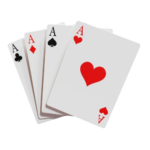
If you would like to learn more about joining our poker community, please click on the image below
Sources Referenced in the No Limit Hold’em and Dating Blog Post:
- Newsweek, “I Learned Poker and Applied It to Dating—I Found Love”
- Vice, “4 Poker Lessons That Will Help You Thrive in the Dating World”
- GipsyTeam, “Poker Player Advice for Dating and Relationships”
- Poker Power, “The Psychology of Poker: How to Read People at the Table and Everywhere Else”
- Poker Power, “Building Confidence in Dating”
- Medium (Ayeshaoberoi), “Game Theory In Dating: How To Win at Love”
- Vocal Media, “The Mathematics of Love: What Game Theory and Probability Can Teach Us About Dating”
- Cornell INFO 2040 Course Blog, “Game Theory in Romantic Relationships”
- Global Dating Insights, “Will Poker Dating Ever Become A Successful Dating Niche?”